

Anduril tests thermal imager in orbit for observing satellites in Earth's shadow
The American company Anduril has reported testing an infrared sensor on the Anduril-216 satellite. The device is designed to observe spacecraft in Earth's shadow, where conventional cameras lack reflected sunlight.
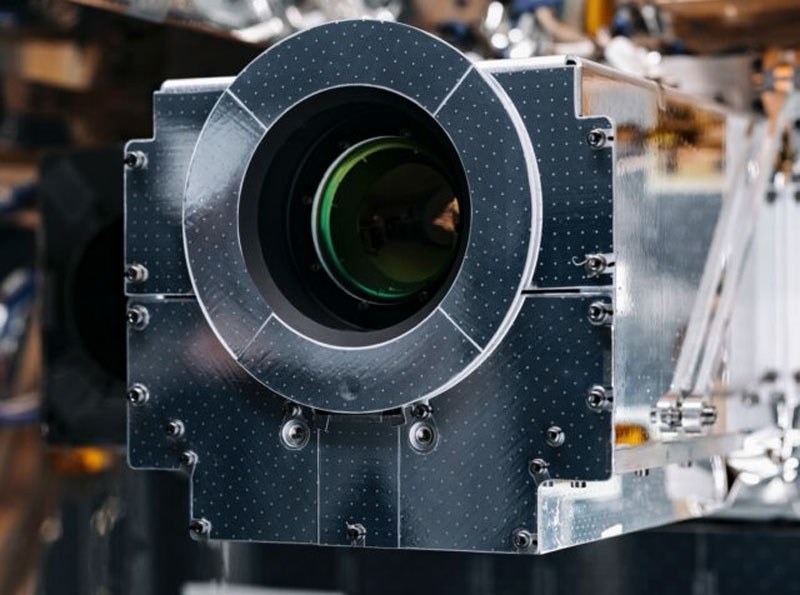
The sensor detects the intrinsic thermal radiation of objects in the long-wave infrared range. This approach can complement conventional optical observations: when a spacecraft enters Earth's shadow, it becomes harder to detect in visible light, but it continues to emit heat.
Anduril-216 was launched in July 2026 alongside other spacecraft on a SpaceX rocket. The satellite operates at an altitude of approximately 590 km and spends about a third of each orbit in Earth's shadow. Anduril self-funded the demonstration mission, while Apex Space manufactured the satellite platform.
In addition to the thermal imager, the satellite carries two optical sensors and a computational module. The module is designed to integrate data from different instruments and process images directly in orbit. This allows for the analysis of observations without transmitting all raw images to Earth.
As an example, Anduril presented an infrared image of the crescent Moon above Earth's horizon. The company claims the sensor can distinguish details of spacecraft, though it has not yet published images of satellites in Earth's shadow. Currently, developers are focused on observations in low Earth orbit. In the future, Anduril plans to sell observation data to commercial and government customers.