

Scientists describe life in one of the last wild oceanic enclaves
A study of the Bikar and Bokak atolls in the Marshall Islands revealed relatively pristine ecosystems and formed the basis for their protection.
In 2025, Bikar and Bokak became the first national marine reserves of the Marshall Islands. Scientists are creating an ecological database for the territory covering 48,000 square kilometers—from terrestrial habitats to deep waters.
The foundation of the work was comprehensive observations conducted in 2023. Researchers used diving, underwater video, deep-sea cameras, and a submarine to study reefs, the open ocean, deep-water communities, seabirds, and turtles.
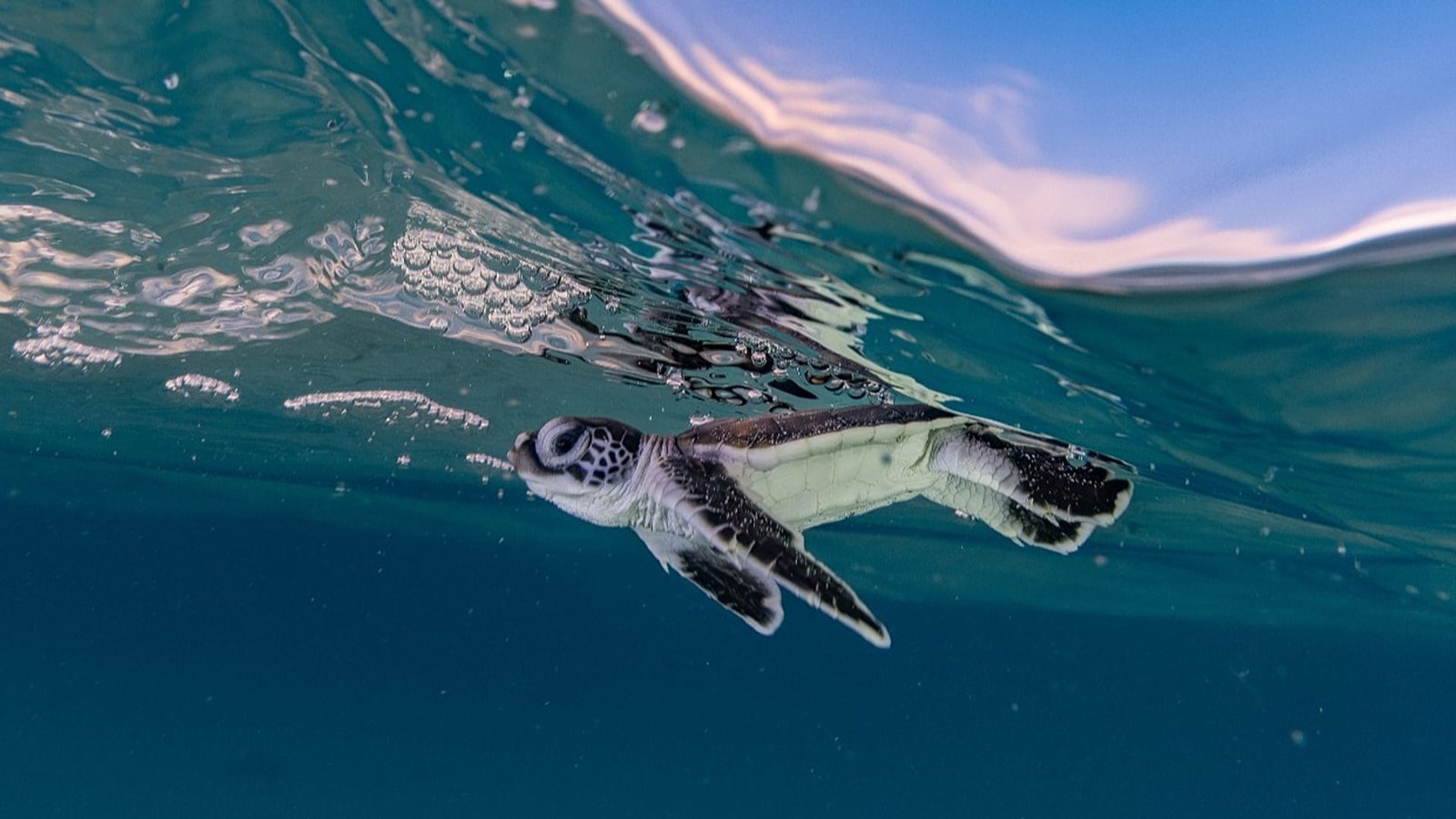
On the two atolls, 15 nesting or presumably nesting species of seabirds and over 260 species of reef fish were discovered. Among them were sharks and other large predators. Deep-sea observations revealed diverse but little-studied communities; some recorded organisms may be new to science. On Bikar, nesting sites of green sea turtles were also found.

At the same time, the ecosystems of the atolls differ significantly. On Bokak, reefs are more strongly associated with corals, and fish biomass is approximately twice as high as on Bikar. On the latter, algae cover more than half of some deep slopes. The reasons for these differences have not yet been established.
Marine ecologist Alan Friedlander called Bikar and Bokak benchmark ecosystems that help understand the consequences of changes elsewhere and plan nature conservation. According to him, the atolls have been protected for decades by the Utirik community, including through "mo" or "taboo" zones, where human activity is restricted.
Scientists note that even such remote reefs are not protected from global warming. They are threatened by coral bleaching, ocean warming, sea-level rise, and changes in the amount of food produced by the open ocean.