

Scientists to attempt extraction of 1.5-million-year-old ice in Antarctica
Russian scientists plan to drill a borehole in Antarctica and collect ice samples approximately 1.5 million years old, said Alexander Makarov, Director of the Arctic and Antarctic Research Institute (AARI).
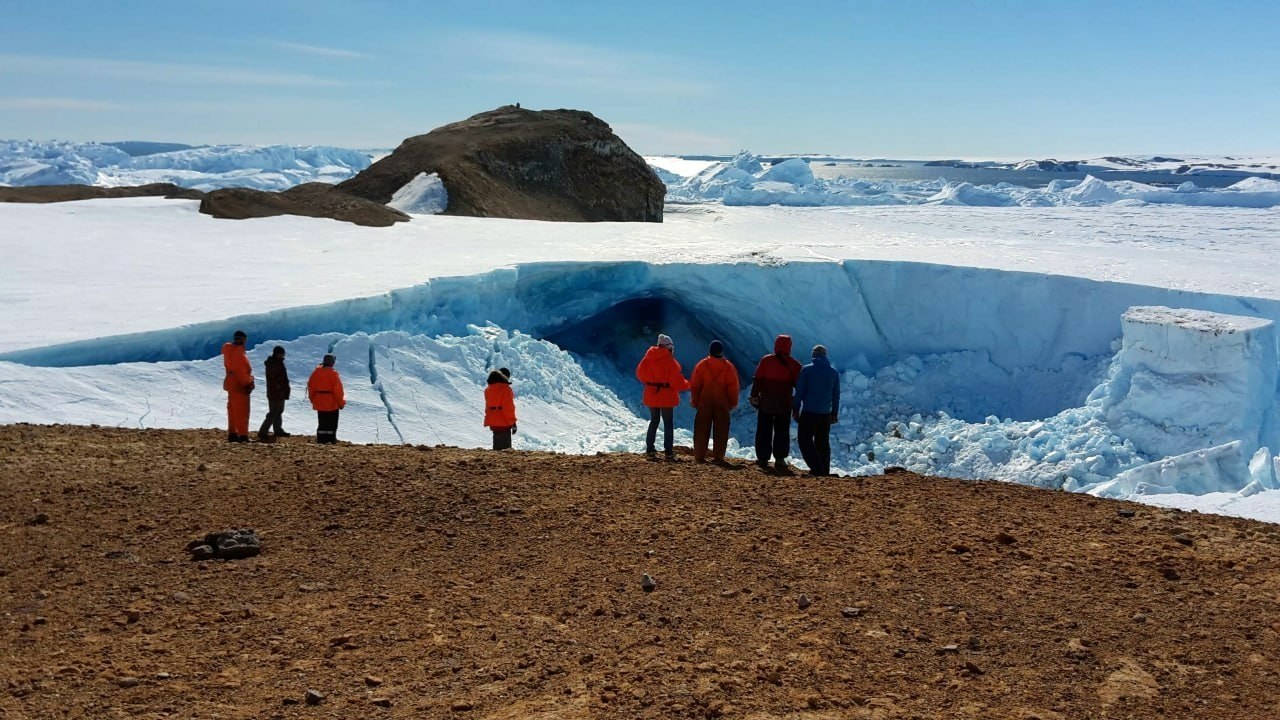
The work will take place as part of the 72nd Russian Antarctic Expedition, approximately 300 km from the Vostok Station. In the first stage, researchers aim to drill a borehole up to 100 meters deep. The samples should help determine the site for future deeper drilling at Dome B.
According to Makarov, ice cores older than 1 million years have previously been obtained at Vostok Station. However, due to layer disruptions, they are not entirely suitable for climate reconstructions: the signal contained in the ice is distorted at around the 420,000–450,000-year-old mark.
Scientists want to study older continuous layers, as the current concentration of carbon dioxide in the atmosphere significantly exceeds the levels of the past 800,000–1 million years. Such data, as expected, will help identify a period in the planet's history with a climate similar to the current warm era and study potential climate changes.
The expedition program also includes research on the natural environment, ocean, ice, geophysics, geology, microbiology, and human adaptation to extreme conditions. From the deck of the vessel *Akademik Fedorov*, scientists also plan to study the movement of water masses, the spread of warm deep waters, and the interaction between the ocean, atmosphere, and sea ice.