

Microsoft tests Windows 11 protection that may block application launches
Microsoft is testing Baseline Protection for Windows 11: applications will be able to check a computer's security and restrict functions or fail to launch if requirements are not met.
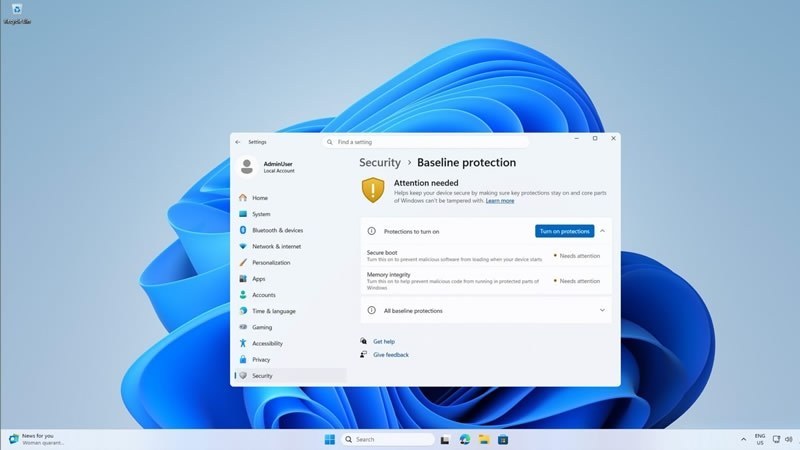
The system will combine eight security mechanisms into a single check. These include TPM 2.0, Secure Boot, VBS, Memory Integrity, signed and certified drivers, kernel debugging protection, and blocking vulnerable drivers. All components must be active for the check to succeed.
Developers will be able to receive an overall result, a list of missing elements, or a hardware token, the authenticity of which is verified on their servers. Microsoft will not block programs itself: companies will be able to display warnings, disable functions, or completely prohibit launching.
Adobe, Blizzard with Battle.net, 1Password, Raycast, and Schoolyear have joined the testing. The latter checks students' computers before exams. The innovation may affect users who disable protection for performance, compatibility, or operation of multiple operating systems, including Linux. Specifically, some Linux configurations may require changes to security settings, such as Secure Boot. However, this does not mean that the new system is specifically designed to restrict Linux usage. Currently, the feature is being tested by Windows Insider participants, and its rollout is planned for 2027.