

Curiosity detects signs of possible water films on Mars over 13 years of observations
Data from Curiosity for 2012–2025 indicated a possible exchange of oxygen between atmospheric CO₂ and water in the soil or thin films. The rover did not detect liquid water.
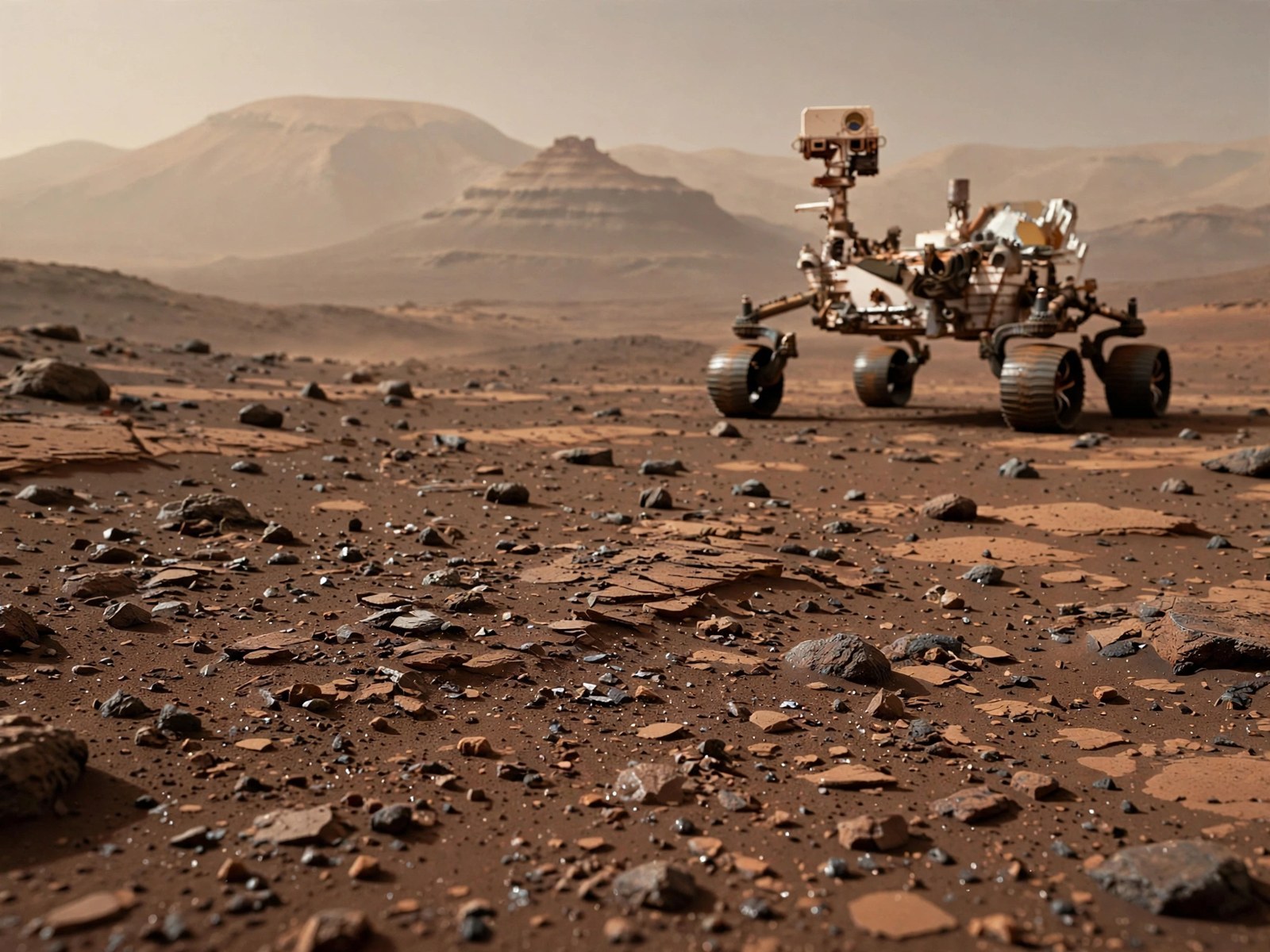
The study is based on measurements taken in Gale Crater, where the SAM instrument suite analyzed gases and the chemical composition of samples. Scientists examined 34 campaigns of the TLS laser spectrometer and 38 measurements from the QMS mass spectrometer, but the main conclusion was drawn from TLS data: QMS measurements may have been more strongly affected by internal instrument signals and changes in its characteristics.
The proportion of oxygen-18 in CO₂ increased in spring and summer in both hemispheres, particularly in the Southern Hemisphere—when Mars approached perihelion. No differences were found between daytime and nighttime measurements.
Models showed that seasonal freezing and evaporation of CO₂, exchange with the soil, photolysis, and gas transport from the poles do not individually explain the observed pattern. CO₂ exchange with water may occur at low temperatures if thin liquid layers form on ice or soil particles; salts can lower the freezing point.
The authors do not claim to have found liquid water or proven the global distribution of such films. All data were obtained at a single location, so the study cannot distinguish between local, regional, and planet-wide processes. Further observations by Curiosity and atmospheric studies in other regions should test the hypothesis.